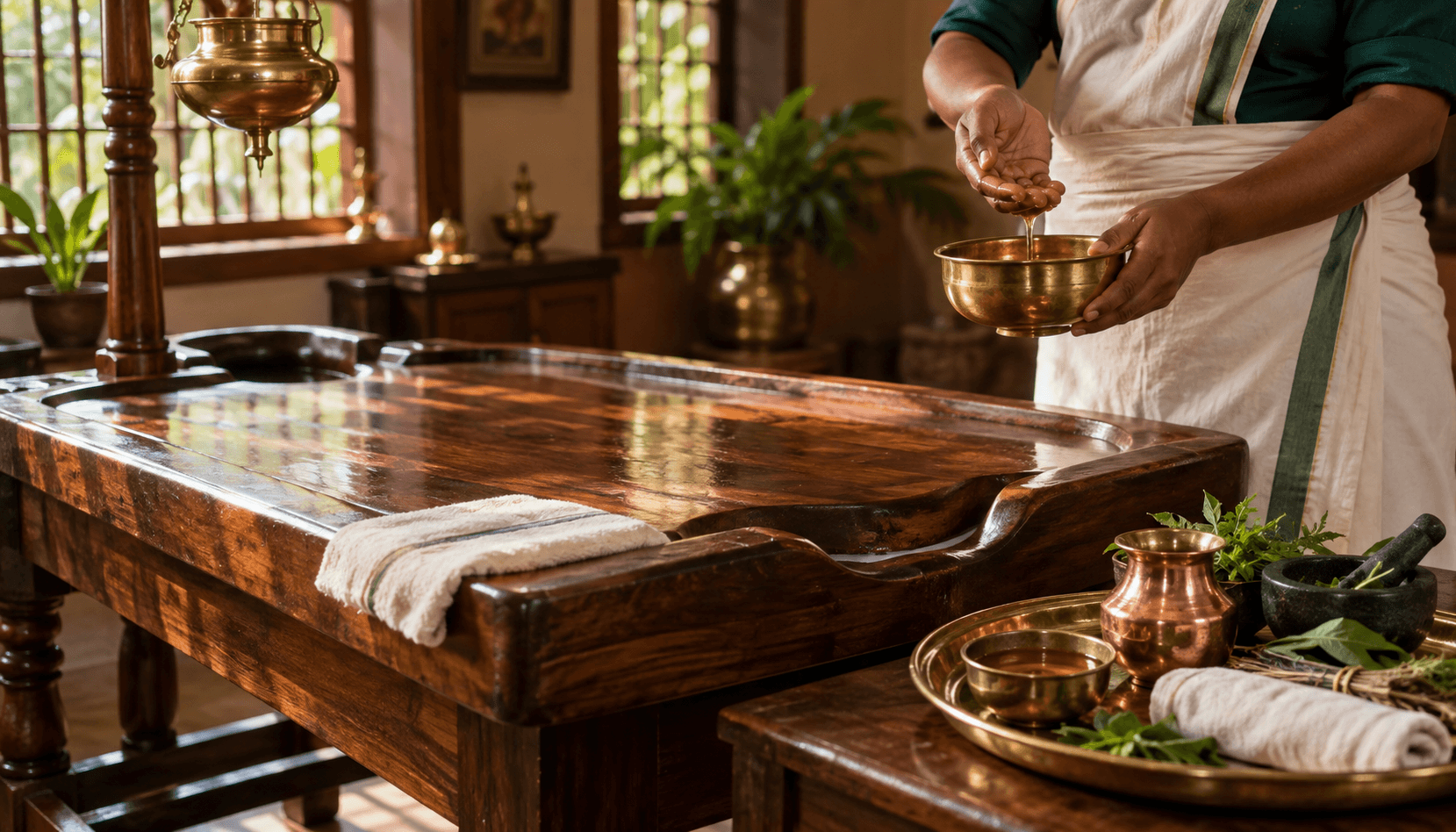
“Is this Panchakarma, or something else?” is a question patients often have once treatment is already underway. In modern Ayurvedic clinical practice, a common misconception is that every patient must undergo Panchakarma to achieve healing. Classical Ayurveda, however, emphasizes treating the patient according to their condition, not automatically performing all purification procedures.
Poorva Karma: More Than Just Preparation
Although Poorva Karma is traditionally described as the preparatory phase before Panchakarma, it has significant therapeutic value on its own. Its main objectives are to:
- Stimulate and normalize Agni (digestive and metabolic fire) through Deepana and Pachana
- Digest and reduce Ama (metabolic toxins)
- Relieve Srotorodha (channel obstruction)
- Reduce pain, stiffness, swelling, and muscle spasm with Abhyanga and Swedana
- Improve circulation and tissue nourishment
- Mobilize aggravated doshas from peripheral tissues toward the gastrointestinal tract
For many patients, these effects alone produce substantial improvement.
When Poorva Karma Alone May Be Enough
Poorva Karma is often sufficient in:
- Early-stage musculoskeletal disorders
- Mild osteoarthritis and cervical/lumbar spondylosis
- Muscle stiffness and sports injuries
- Stress-related disorders
- Mild digestive disorders
- Seasonal health maintenance
- Patients who are elderly, weak, or not fit for intensive purification
Many patients experience reduced pain, better mobility, improved appetite and digestion, better sleep, reduced inflammation, and improved quality of life — without needing classical Panchakarma.
When Panchakarma Becomes Necessary
Panchakarma is considered when disease is chronic or recurrent, doshas are deeply aggravated, conservative therapies are insufficient, or a deeper purification is indicated before Rasayana or long-term management. Examples include chronic psoriasis, rheumatoid arthritis, recurrent allergic disorders, chronic sinusitis, and certain metabolic disorders. In these cases, therapies such as Virechana, Basti, Nasya, or Vamana may be recommended based on the patient’s condition.
A Simple Way to Understand the Difference
Clinical analogy: Imagine cleaning a house. Poorva Karma is like loosening dirt, dusting, and gathering waste into one place — even this makes the house much cleaner. Panchakarma is like removing all the collected waste from the house. This deeper step is needed only when there is a significant accumulation.
The Key Clinical Message
Poorva Karma is not merely a preparation. It is a therapeutic intervention that can independently relieve disease in many patients. Panchakarma is reserved for situations where deeper Shodhana (elimination therapy) is clinically appropriate. A skilled Ayurvedic physician decides whether a patient needs Shamana (palliative therapy), Poorva Karma alone, or full Panchakarma, based on the individual’s constitution, disease stage, strength, age, and season. This patient-specific approach is one of the core principles of classical Ayurveda.
Frequently Asked Questions
Does every Ayurvedic patient need to undergo Panchakarma?
No. This is a common misconception. Classical Ayurveda emphasises treating the patient according to their specific condition, not automatically performing full purification procedures on everyone. Many patients see substantial improvement from Poorva Karma alone.
What is Poorva Karma and is it just preparation for Panchakarma?
Poorva Karma is traditionally the preparatory phase before Panchakarma, but it has significant therapeutic value on its own. It stimulates digestive fire, reduces metabolic toxins, relieves channel obstruction, and reduces pain and stiffness through procedures like Abhyanga and Swedana.
When is Poorva Karma alone enough, without full Panchakarma?
Poorva Karma is often sufficient for early-stage musculoskeletal disorders, mild osteoarthritis, muscle stiffness, stress-related disorders, mild digestive issues, seasonal maintenance, and for elderly or weaker patients not fit for intensive purification.
When does a physician recommend full Panchakarma?
Panchakarma is considered for chronic or recurrent disease, deeply aggravated doshas, cases where conservative therapy is insufficient, or when deeper purification is needed before long-term Rasayana management. Examples include chronic psoriasis, rheumatoid arthritis, and recurrent allergic disorders.
Not sure which treatment your condition needs?
Book a consultation at Kooplicat Ayurveda Hospital in Kottayam. Our physicians assess your constitution, disease stage and strength before recommending Shamana, Poorva Karma or full Panchakarma.
Book a Consultation